
Icon Veneration
Season 4 Episode 2
Special Guest: Cory Reckner
Icon Veneration: Is It Biblical or Required?
The debate over icon veneration is not really about art. It is about authority, worship, and whether the church can require what Scripture never commands.
In this episode of The Restless Theologian, we examine whether images in worship can remain symbolic, or whether they inevitably become objects of devotion. Eastern Orthodox and Roman Catholic traditions defend the use of icons, distinguishing between veneration and worship using categories like latria and dulia. But the question remains whether those distinctions align with Scripture, especially when the practice includes bowing, kissing, candles, and incense.
At the center of the discussion is a serious claim made at the Second Council of Nicaea (787): that refusing to venerate icons is not merely a difference of opinion, but grounds for anathema. That raises a deeper issue. Can a practice never commanded in Scripture become necessary for faithful Christian worship?
The Second Commandment and Images in Worship
We begin with Exodus 20 and the Second Commandment, which forbids making carved images and bowing down to them. While some argue this only applies to false gods, the command itself explicitly includes physical acts of devotion.
The issue is not simply whether an image is considered divine. It is whether religious acts directed toward an image are authorized at all.
This connects closely with themes explored in our episode on The Trinity - Three in Person, One in Essence, where the nature of God and proper worship are foundational. If God defines how He is to be worshiped, then the burden of proof falls on any practice that introduces new elements into that worship.
Biblical Warnings: When Symbols Become Snares
Scripture provides multiple examples where legitimate objects became spiritually dangerous when devotion attached to them.
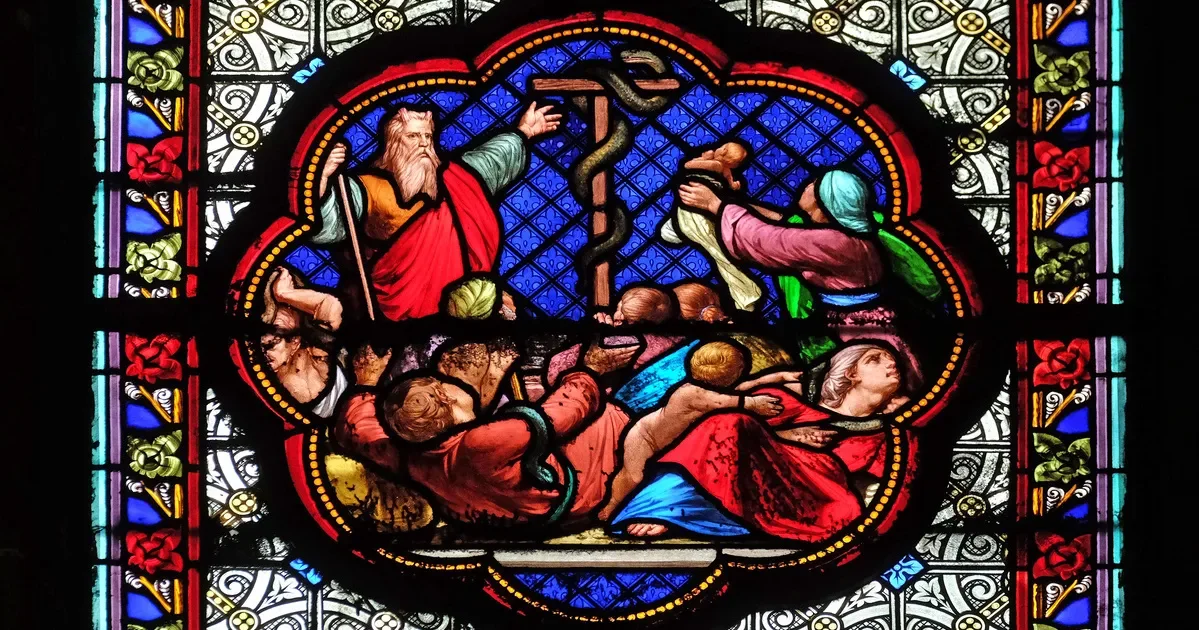
The cherubim on the Ark of the Covenant were commanded by God, yet Israel was never instructed to bow to them, kiss them, or pray through them. Their presence did not authorize devotional interaction. The bronze serpent in Numbers 21 was also commanded by God and used for healing. Yet in 2 Kings 18, it is destroyed because the people began burning incense to it. What was once a God-given symbol became an object of misplaced devotion. Gideon’s ephod in Judges 8 follows the same pattern. It began as a religious object connected to God’s victory, but the text says that all Israel “whored after it,” and it became a snare.
These examples reinforce a consistent biblical warning. Even good and God-ordained symbols can become idolatrous when the human heart attaches devotion to them.
Nicaea II and the Question of Authority
The debate intensifies in church history with the Second Council of Nicaea (787). This council formally affirms icon veneration and introduces the idea that “honor passes to the prototype.” Acts such as bowing, kissing, and lighting candles are described as appropriate responses to icons.
More significantly, the council declares that those who refuse to venerate icons are anathema. This is not presented as a secondary issue. It is treated as a boundary of orthodoxy. As theologians like Gavin Ortlund have pointed out, the council’s language ties icon rejection to separation from God. This raises a serious question about authority. If Scripture does not command icon veneration, how can its rejection be condemned at this level?
This connects with broader discussions in our episode on The Keys of the Kingdom, where the authority of the church to bind and loose is examined. The issue here is whether the church is exercising that authority within the bounds of Scripture.
The Incarnation and the Christological Argument
One of the strongest defenses of icons is rooted in the Incarnation. Since Christ took on visible human flesh, it is argued that He can be depicted. John of Damascus famously defended this position, arguing that he makes an image of the God he has seen. The claim is that the Incarnation changes the visual question.
However, this raises a deeper theological issue when examined through the lens of the Chalcedonian Definition, which we explored in The Light of the World. Chalcedon affirms that Christ is one person in two natures, without confusion and without separation.
An image does not depict a nature in abstraction. It depicts a person. If an icon depicts only Christ’s human nature, it risks separating what cannot be separated. If it depicts the person, then it depicts the eternal Son, who is divine. This creates a tension. The Incarnation makes Christ visible in history, but it does not necessarily follow that devotional representation is authorized in worship.
Does Icon Veneration Add to Christian Worship?
The New Testament consistently emphasizes Christ as the one mediator between God and man. That raises the question of whether icons function merely as reminders or whether they take on a practical role in devotion.
Even if the intent is not to worship the image itself, repeated acts of bowing, kissing, and praying in front of an image raise questions about whether a new layer of devotional practice has been introduced.
This concern connects with themes explored in The Lord’s Supper, where the means Christ has given to His church are carefully defined. If Christ has already given Word and Sacrament as the means by which we approach Him, adding new devotional practices requires strong biblical justification.
Why This Matters
This is not a minor disagreement about aesthetics or tradition. It is a question of whether the church can require practices that Scripture never commands, especially when those practices are tied to faithfulness or even salvation. Scripture shows a consistent pattern. God’s people are prone to turn even good things into objects of misplaced devotion. That is why the boundaries of worship matter.
At the same time, the Incarnation must be upheld without compromise. Christ truly took on flesh, and that truth must be defended. The question is whether icon veneration is the proper way to do so.
In the end, the issue comes back to authority. Do we honor Christ best by adopting devotional practices developed later in church history, or by receiving Him as He has given Himself in Word and Sacrament?
FAQ
What is icon veneration?
Icon veneration is the practice of showing honor to sacred images through acts such as bowing, kissing, and lighting candles, with the intention that the honor passes to the person depicted.
Do Orthodox Christians worship icons?
They would say no. They distinguish between worship and veneration. The debate is whether those distinctions hold in practice and whether such actions are biblically authorized.
What does the Second Commandment actually forbid?
It forbids making carved images and bowing down to them. The key issue is whether religious acts directed toward images fall under this command.
Why is the bronze serpent important?
It was commanded by God but later destroyed when it became an object of devotion. It serves as a warning that even good symbols can become idolatrous.
How does Chalcedon relate to icons?
Chalcedon teaches that Christ is one person in two natures. The question is whether an image can represent that person without creating theological tension.
Is this debate about art?
No. It is about worship, authority, and whether practices not commanded in Scripture can be required by the church.
-
Zechariah Eshack 0:25
Welcome to another episode of the Restless Theologian Podcast. We are going to be discussing the use of images in worship and as well as icon veneration. And we're going to be going through what the Bible says, what our thoughts are on just this kind of heated topic, especially during church history. This has been a heated topic. And I feel like with the rise of orthodoxy, at least the appearance of a rise of orthodoxy in the West, when reviewing some of this information, I feel like there's some important things to discuss about their positions and what they say about salvation. And so to unpack this with me, I have my good friend Cory Reckner, you know, a regular back on with us. How are you doing, Cory? Good, Zech. How are you? Doing great, man. Doing great. Um tired some days.
Cory Reckner 1:15
And why is that, Zech?
Zechariah Eshack 1:17
Well, we have a two-month-old at home. So it's me and Katie's first, little Gideon. Yeah. So congrats. Thank you. Thank you. So it's definitely going to be rough getting back into it. Um, trying to find time to study, trying to find time to do anything. Yeah, do anything. As I'm sure you're aware with the three little ones.
Cory Reckner 1:37
So yeah, time is kind of a funny thing, right?
Second Commandment And Idols
Zechariah Eshack 1:39
Yeah. I know. And I'm when I'm thinking about it, I'm like, what did I do with all my time before I had a kid? And I'm like, my mom had eight boys. I'm like, how did how did she have time for anything? Anything, yeah. That's crazy. Yeah. So I I figured to start this off, I was hoping that you could read Exodus 20, verse 4 for us, and then we would just kind of go into it.
Cory Reckner 2:02
Sure. Exodus 20, verse 4. You shall not make for yourself a carved image or any likeness of anything that is in heaven above, or that is in the earth beneath, or that is in the water under the earth.
Zechariah Eshack 2:19
When you hear that, what how do you take that?
Are Icons Required For Christians
Cory Reckner 2:22
So what I assume this passage is pretty much referring to is the idea of cre like crafting an idol, right? Right. And this passage says you shouldn't make for yourself a carved image. So I'm assuming that's probably like, you know, a wooden figure. Um, you know, you're actually carving some type of creature that exists in the world. Yeah. And I would like I said, I would assume that it's in reference to saying you shouldn't, you know, make for yourself a carved image any likeness of anything that's in heaven above. So that could be, you know, obviously beyond what's on the earth. Like angels and angels, yeah. Yeah. Anything, you know, celestial, um, that's in the earth beneath, right? So any sea creatures, any beasts, or that's in the water. Um, and yeah, like I I was kind of you know getting to. I'm assuming that this passage is directly relating to idolatry and creating things that you are gonna, you know, in essence, end up worshipping, right? Yeah. So don't create an image that you're gonna go towards to worship. Yeah. So that's the biggest takeaway I would say I'd get from that passage.
Zechariah Eshack 3:39
Yeah, so this isn't a conversation about whether or not Christians can have art or religious art. Um, and obviously we can maybe go into detail about depictions of Christ specifically and whether or not that breaks the second commandment. So the question is, is are devotional images um used for veneration like required by Christ and his apostles? Is that something that um that's a requirement? You know, it's a really interesting question because the Orthodox would say yes. They they um from the videos I've watched, um, from Father Josiah Trenham to I think it's Father Spiriton, um, a few others, uh, the general consensus seems to be that uh icon veneration is not just approved or allowed, it's required. Or it's at least it's necessary to use their terms. Um so we're gonna get deeper into that. I think it's fair to approach it by using some of their terms and how they understand them. So with Roman Catholics, you're gonna have kind of three different versions of what you would say adoration, veneration kind of. Uh so here we have there would be dulia, which would be that would be veneration given to saints. You have hyperdulia, which is veneration given to Mary, and then you have Latria, which is veneration given or adoration given to God alone. So that would that that in and of itself, that would be worship to them. The others don't qualify as worship. And so in the Orthodox system, it's kind of similar, except they don't have the special category for uh hyperdulia for Mary. They also have um Latria, which is another, you know, similar to Roman Catholics, where that's reserved for God alone. Is there a difference between adoration and veneration? Um I I'm having trouble seeing the difficulty. I mean, I know how they define the terms, and I know how, like, especially with the Orthodox, I know where they're coming from. Um, but like if you think about it, like so veneration would include um bowing, kissing, lighting of candles, and offering incense before them. And they'll even have like prayer corners where they bow down, like they'll kiss the icons, they'll bow down before them, uh even in their homes and at their churches. So I remember, you know, asking you to discuss this with me, and you were you seemed a little bit taken back or surprised that this was even a thing. So I think since we're a little bit, you know, as Western Christians, we're a little bit um uh removed from things that go on in the East and the Eastern tradition. So I mean, what was your overall like first impression?
Cory Reckner 6:28
Yeah, well, and I think you said it well, I personally am very removed, far removed from any practices like this. Yeah. Um I, you know, was raised in a few different denominations when I was growing up, and we didn't practice any of these things in those denominations either, right? Yeah. And then when I found my own faith journey happen um and got plugged into different churches here and there, I still didn't experience this. So this is definitely something that I'm very far removed from, not an expert on. Um, but yeah, like you mentioned, when I first started looking into this, I I guess I was more surprised than anything, yeah, that this is such a regular practice among so many people. So many Christians, too. Specifically Christians, yeah, yeah. Um, and you know, sometimes the term Christian can be kind of interchangeable depending on who's referring to it. Um, you know, some people that are Catholic would say they are Christian, Eastern Orthodox would say they're Christian as well. So when I say Christian, I think people who are a part of those faith, you know, traditions where this is so normal for them, yeah, they might look at somebody like me and say, Well, how could you not have been doing this for so long? And don't you see why this is right for us to do that, right? Yeah. And so they, like I said, after, you know, kind of doing some research on this, I was just more surprised than anything. I I feel like I've been in my own little comfortable your own little bubble. My own little bubble of non-veneration for so long that I'm like, oh, okay. Well, I didn't I I apologize, people. I didn't realize that this is something that you guys did so often. So yeah.
Cherubim, Covenant, And Mediators
Zechariah Eshack 8:07
Yeah. So yeah, there's um around uh so from looking it up, there's between 220 and 260 million Orthodox Christians. So it's it's no small number. Yeah. Um, I would say, I mean, I would without having the numbers in front of me, I would definitely say Protestantism makes up a lot more than that. And it's probably because we have so many denominations. Um, and I think I think for me it it is, and I've had this conversation with other people, that how do you define a Protestant denomination? Because is it really fair for um like now that now that the state doesn't control the the religion, um, any church that pops up is, you know, if it's not Orthodox or Roman Catholic, you know, it gets slapped with a label of Protestant. It's almost like this, the other category that people can just throw throw everything under that umbrella. Yeah, any and all. Yeah. And as Protestants, we don't consider like we wouldn't consider Jehovah's Witnesses as Protestant, we wouldn't consider Mormons as Protestant, even though like when they do, you know, some of those survey big surveys, that's how they that's how they place them as in the Protestant category. They bracket them together, yeah. Yeah. We're in my you know, non-denominational, you know, I would consider it Protestant, even though it technically is not a church that came out of the Protestant Reformation. So those would be like Presbyterianism, Anglicanism, and Lutheranism specifically. So um, you know, as we're getting into this, um, I basically want to lay down you like my thesis is just that I mean scripture never commands icon veneration. It is completely and utterly silent and void of um that it it that it's a practice that should be done, or that Jesus can be depicted. That opens up a doorway for a lot of questions to ask because their reasoning would go like this. It would be like, well, since God became incarnate, like he couldn't be shown before, he couldn't be depicted before because he was only like spirit, but once he became incarnate and became man, he is depictable because once he came to earth, you know, he had a human body, and then therefore, you know, someone could have drawn him, so therefore he is depictable, and um, if anything, their use of icons in their mind further um qualifies or reinforces the fact that he became incarnate, you know, a material person. So I wanted to run through some of their arguments real quick and we'll talk about them. But the use of images in worship, like so one of the first things that they're gonna bring up, and I've seen them bring this up several times, is about the use of the cherubim, like in the Ark of the Covenant. So what do you what what do you think of um do you think that that's a justified response? Like, so we have images in worship, God commanded these images, therefore we should have images in our worship. Like, do you do you think that like as a Protestant, do you think that we should have images and worship at all? Or do you think that like you know should be left like we can have the artwork at home? Like what would what is what are your thoughts on it?
Cory Reckner 11:33
Yeah. Um I guess without overgeneralizing too much, the way I personally view it is I think we should go first to what Christ says about, you know, anything. Then we should go into the, you know, perhaps Pauline letters or the rest of the letters of the New Testament. And then we can kind of backtrack to the New Test I'm sorry, to the Old Testament and practices of the Old Testament. And then I think we should look at church history to see some of these conclusions that were brought about, right? Right. But I think it should always start first with Jesus, because I think Jesus is the final say-so of everything, right? Right. As a Christian, I would hope that you know my brothers and sisters out there that are listening to this would say the same thing. They would say, we put Christ above all things first and foremost, you know, whether it's images or whatever, you know, any kind of visual representation of things. So I want to first and foremost know what Christ has to say about these things. And so after trying to go through the scriptures, Jesus doesn't really say much about any of these things, right? Nothing directly explicitly talking about images or icons, right? That I can remember at least. Um so okay, so let's go to the rest of the New Testament. And are these things brought up somewhat? Right? Okay. They're brought up in the book of Acts a little bit, and then in the letters, not really too much, right? Right. But then we go to the Old Testament, okay? And the Old Testament, this kind of stuff is all over the place, right? Like you mentioned with the cherubim, um, Ark of the Covenant, right? A lot of illustrative things happening in these worship zones, you know. So if people are still viewing the Old Testament and a lot of the traditions and practices that were meant to have been carried on even through Christ's times as legitimate and, you know, uh they're helpful for worship, I can see why people would say it's a valid response, right? Because like you mentioned with cherubim, it's like, okay, this was like you know, commanded by God to set up the temple and the Ark of the Covenant these ways so that people would worship him fully, right? Okay. Now that makes sense to me. I guess where uh I would say it doesn't make as much sense to me is in the idea of Jesus being the final mediator between God and man, right? Um the book of Hebrews talks about there's one mediator between God and man, and it's Christ Jesus, right? So Jesus is like the middle point between us and God. In the book of Hebrews, it definitely doesn't ever say you know, there are other things that help with that, right? It never alludes to that. If anything, it kind of alludes to the opposite. Like with the um, you know, the Old Testament traditions, especially, how a lot of these practices were meant to represent things that Christ has fulfilled, right? Right.
Zechariah Eshack 14:57
And so to go off of your point, especially in the book of Hebrews, it makes note about like the holy place in the tabernacle, how it being how it is basically it's a um exact copy of the heavenly things. Right. Um I don't want to to detour us too much. I'll let you finish your thought and then I'll Yeah, no, you're good.
Cory Reckner 15:19
Well, no, that that's exactly what I'm saying. And it's the whole idea of a copy of it, right? Right. So the idea of like icon veneration, I think is like I said, I'm not other people saying this. I'm just assuming this is what they're thinking. They're saying that's exactly what they're doing. They're they're venerating icons as a response to this being a copy of holy matters and holy things and specifically holy figures like Jesus, right? Right. Um, so the thought behind all of that makes sense to me, but like I said, it doesn't make as much sense that there would still be something else included in the picture other than just Jesus himself. You know? Yeah. So that's that's my biggest argument against I understand the Old Testament imagery idea and saying, yes, this is what was practiced, right? So why should we not do the same thing now? My response is, well, we have to look at the covenant, you know, time period that that was in. That was the Mosaic covenant, right? The Mosaic, however you pronounce it. We are in the new covenant time because of Jesus, right? That was an old covenant, and now we're in a new covenant, you know. So does that mean we need to continue to practice things of the old covenant? I don't necessarily think so, you know.
Zechariah Eshack 16:43
Yeah, I mean, it it it would go back to you know, one of the arguments being um, you know, like what what do we keep from the old law? And obviously, most Christians today would agree that the Ten Commandments we we keep like the moral law, right? Rather than like, say, the dietary laws or anything like that. Like, um, like for example, when Peter has his vision, basically what God calls clean, don't call unclean. And so basically the takeaway from it was that obviously there were certain foods that were commanded against eating, and then it's like now it's basically free game. You know, we can have bacon. Yes. I mean, thank God, right? Yeah. So talking about the Ark of the Covenant and um the cherubim on the Ark, I think what's left out of the conversation from what I've seen from every Orthodox priest, they never bring up the fact that, okay, so there's a carved image, but they don't mention that it was net there was never commanded to bow to them, they were not commanded to kiss them, to light candles before them, or any notion that the honor that they give to that image passes through to the prototype, which in that case would be a cherubim, it would be an angel. Yeah. I mean, if we can even call him an angel, because you know how Heiser had lists his categories.
Cory Reckner 18:09
Yeah, yeah. I mean hierarchies of beings. Yeah.
Zechariah Eshack 18:13
So I don't even know what would be a better term. Spiritual being, yeah, heavenly being.
Cory Reckner 18:18
Heavenly, spiritual, yeah, celestial, yeah.
Bronze Serpent And Ephod Warnings
Zechariah Eshack 18:20
Yeah. So there's two other incidents that I want to bring up because one of the other ones definitely gets brought up about like the bronze serpent, for example. If my memory serves me correctly, that God commands Moses to make it, and then God uses it, and through it, and through those means, he heals the Israelites from, you know, the diseases they were suffering, like the affliction from God for their basically disobedience. But the problem is, is, you know, I mean, it's an image, right? And it's one that's God commanded to be made, but the problem is, is centuries later in 2 Kings, Hezekiah actually has it destroyed because Israel began burning incense to it. And you burning incense to it, you know, just kind of suggests this sort of uh veneration, have you, or adoration. I understand they make a they make a uh point to separate those two terms, but sometimes if you bow before it, you kiss it, you you burnt incense before it, like it almost seems to me like I mean, not to be crass, but you know, it walks like a duck, quacks like a duck, it's probably a duck. I mean, right? Like you can try to use that, you can try to use verbal judo to try to get out of it, but how it looks, especially as a Western Christian, uh, it I would say it's not it's not a flattering look.
Cory Reckner 19:49
Yeah, it to me it honestly, and I I want to be respectful because like probably more so than I've Oh no, I mean I I I think we're both gonna say the same thing here, it just looks a little different from how we're saying it. Yeah. If you're devoting yourself to it, it's kind of hard to separate it from like an act of worship itself, you know? Be because it's used in your worship, right? It's it's very yeah, and the the biggest word I was thinking of with this whole practice of venerating icons is modal. It's a form of your worship, right? It's a part of it. It's it's it's a mode of it. Yeah. So it's very modal. So it's like a piece in the machine, excuse me, that you're using to worship God. But with saying that, you're still bowing to it, like you said, you're you're kissing it, you know, you're dedicating yourself to it, right? As a part of your bowing to God, praying to God, you know. It's used as a representation of your relationship. I should say it's used as a representation of like your bridge to God. Yeah. Right. So it's like part of the mediator ship.
Zechariah Eshack 21:09
I I could see that. Yeah. It when I was reading uh and kind of researching this, it almost seems like it plays a mediatorial role in some sense.
Cory Reckner 21:17
Yeah, that's what I was thinking. Yeah.
Zechariah Eshack 21:18
And I no, I and I totally agree with you. I think that that was my takeaway from it, is that um, you know, I've I've heard some from the other side, they'll say, uh, it's like, well, Protestants, they have their nativity scenes, you know, at Christmas. And it's like, well, what's the difference? And it's like, I would say, well, Protestants aren't bowing down before it, kissing it, offering, you know, lighting candles before it. I mean, I guess some might. I mean, yeah, maybe it's po I mean, I'm sure it's possible, but Yeah.
Cory Reckner 21:50
I'm too worried about germs to kiss things, honestly. I'm sorry. I just am, you know.
Zechariah Eshack 21:55
Sorry. I actually, yeah, I would love to do an episode on um uh
Cory Reckner 22:00
Kissing?
Zechariah Eshack 22:01
No. That'd be kind of a weird. I don't know what I would talk about.
Cory Reckner 22:04
Theological stance on kissing. Yeah.
Zechariah Eshack 22:07
Yeah. Don't do it until you're married. Because of germs. Yeah. Yeah. No. So I remember watching this video, and it was um a bunch of Orthodox people. They were uh Relics is a whole different conversation, but it's kind of related. Um, but they were kissing like this old decaying like foot of like a saint, and I'm just like, I I guess I have very a very difficult time seeing any of that in um the New Testament. I would like to bring up one more example from the Old Testament, and then we're gonna shift a little bit and talk about uh some of the early church context. So, and I thought this was a good one because Gideon obviously is my son's name, and when reading about Gideon, I learned about um his ephod, uh, if I'm saying that correctly, but basically what it is is like usually it's when I when I think of ephod, I think of um like Aaron, you know, the Levitical priest, how he had an ephod. And um, it seemed like it was it was very complex where it had like you know 12 stones to represent the 12 tribes of Israel, and then it also contained um uh I'm trying to think of the name for it, but something that contained uh like their version of like lots, like a like to can't to cast lots.
Cory Reckner 23:27
Yeah, for decision making, yeah. If if a stone would brighten up compared to the others, it's like, oh, that's what we're going with, you know.
Nicaea II And Honor Logic
Zechariah Eshack 23:33
Yeah, and there seems to be some speculation as to like what they exactly look like, because it doesn't seem like anyone knows specifically, or they have like a general idea. But anyway, so what we have here is Gideon, so he has this ephod, right? And then after he passes away, according to scripture, it says all of Israel hoard after it, and it became a snare to them. So here you have an object, and it's kind of a religious object, but it becomes the source of veneration, or you know, they go to it to almost put their trust in it and their faith in it. So you see that recurring pattern, right? Like, even if it's a God-ordained uh image, um, such as the one like the bronze serpent, I guess it just goes to show you John Calvin was definitely right that the human heart is a factory of idols, because you look, you know, Moses is gone for not that long, making a golden calf. So I think the use of images and worship, for me personally, it's just Christ nor the apostles ever commanded it. I want to go straight actually into the Council of Nicaea too. So basically in 787, the Second Council of Nicaea affirmed icon veneration, which basically teaches that the honor given to the image passes through to the prototype. So in it discusses uh kissing, bowing, lighting candles, and offering incense before images. So it's not just aesthetics, it's not just artwork, it's used in devotion. So where that came from, and I've noticed that some of the Orthodox priests they'll quote uh Basil, I think it's Basil the Great, and his statement is um the honor paid to the image passes through to the prototype. I want to kind of put that in its context because what do you think when you hear that? Like first first thoughts when you when you listen to it. Like the image, the honor we pay to the image passes through to the prototype. What's your first thoughts when you hear that?
Cory Reckner 25:48
Just like a transfer from one thing to the next, you know, it's transactional. Yeah.
Zechariah Eshack 26:01
Right. But what I when I kind of dove a little bit deeper into it, what I learned was, I mean, he was speaking in Trinitarian terms. Okay. So when scripture calls Christ the image of the invisible God, Basil is arguing that the honor given to the Son is not separate from the Father.
Cory Reckner 26:19
Okay.
Zechariah Eshack 26:20
So the Son perfectly reveals and represents the Father. We can reference Hebrews 1.3 or Colossians 1.15 about Jesus being the image of the invisible God or the exact imprint of God's nature. So when I first heard that, I was like, oh, the image, like, okay, earlier on with Basil, he he's making that argument. But no, he's actually saying, I mean, in his context, he's using the image to refer to Christ, not images of artwork.
Cory Reckner 26:50
Okay.
Zechariah Eshack 26:51
And so they're extending that out, meaning, you know, since Christ was depicted in an image, a lot of those references, like us ourselves, were made in the image of God. Yeah. So it's almost like we're like a reflection of his image, I guess. But with Christ, obviously he's the exact imprint. Um, because he is God. So I thought that that was important to clarify. Um, but I would say that one of the biggest things to note about this in uh the Baptist theologian and pastor Gavin Ortland does an excellent job. Did you get a chance to watch that video?
Cory Reckner 27:30
Yeah, I've seen a few of Gavin Ortland's um, you know, talks about icon veneration, as well as some of his responses to how people have interpreted his talks on icon veneration too. So it's very interesting, yeah.
Zechariah Eshack 27:45
Right.
Cory Reckner 27:45
Yeah.
Zechariah Eshack 27:46
Yeah, because he he makes a valid point that um so how those um fathers of Nicaea too, how they interpreted or how they viewed, I should say, the anathemas, because they anathhemized anathematize anyone who not only rejects the use of like icon veneration, but does not do icon veneration. They use the term anathema, and in their terms, it basically means uh it's like eternal language for damnation, like you're separated from God Himself. So you're basically inflicting by your ejection of it, you're you'll face basically God's wrath. Like it's like rejecting Christ. Yeah, yeah, yeah, yeah. So, and that's no small thing. As I've been reading about it and just kind of reading some of the people's comments too, under Gavin Ortland. I mean, I mean, they they have a good point about like that is worth making a big deal about. I mean, it's the Seventh Ecumenical Council, I mean, which is accepted both by Rome and the Orthodox. Uh, you said you did watch the Jordan Cooper video as well. And Jordan Cooper Cooper, I you know, I'm not Lutheran, but I I do like him, and I love it when he collaborates with Gavin Orland. He he does a really good job.
Cory Reckner 28:58
Yeah, I like historians that sum things up really easily for people that are simple-minded like me. So just give me a nice little summary and a recap, and then I feel like I get it, you know. And he was good at that. Yeah, I watched his video.
Anathema, Burdens, Sola Scriptura
Zechariah Eshack 29:13
Yeah, well, and so Gavin Orland does bring up, it's I think it's not until I think he says the sixth or seventh century where icon veneration actually has any sort of grounding where you find you have evidence of it. Um, so like Father Spiriton, he basically is saying, you know, oh, we had images in the catacombs, and therefore it's like, and so you had you have depictions of maybe Peter or Paul or in the catacombs, and there therefore that equals icon veneration should be demanded and enforced. Yeah. Because how it appears to me is that not only is there not any evidence of that, um, evidence that of icon veneration at that time, because having a depiction and um trying to enforce icon veneration are two different things. Um, but it makes me think of that passage where Jesus is talking about the Pharisees and how he mentions that basically they tie heavy burdens on men's shoulders, and they will do nothing, they won't even lift a finger to help men with them hit with those burdens. And I think that that is a direct cor correlation to what the Orthodox have done. And it's no, I mean it's no small thing to tie this heavy burden on men's shoulders and say, you have to participate in icon veneration, or therefore your soul's in jeopardy. So I think that that's a very serious thing, yeah, because you're adding to God's word, and that is to me, I think that that is why Sola Scriptura is such an offense to them and why they get so angry about it. Like you you hear a lot of um arguments against solo scriptura, and in my mind, like I I feel like because what does Sola Scriptura do? It provides those guardrails, right? Because what Sola Scriptura is saying is that okay, for on matters of faith and morals, you cannot basically burden God's people with like to affect Christian liberty and Christian conscience, you cannot try to enforce something for salvation. Like extra commands, extra commands that God Himself does not require. Yeah. You think that that's fair?
Cory Reckner 31:31
Yeah, yeah. Um and like you said, it almost just kind of feels like I I don't want to say it's a misinterpretation of you know other passages that have clearly explicitly taught that you know God was worshipped using like illustrative methods and perhaps icons, sure. Um, but I you know, like you said, okay, so we find these, you know, just historical examples of people having done them. Well, we could find historical examples of people doing a lot of things that might not necessarily be exactly what you know God actually would like from people, right? Right. So yeah, it does feel like just with the extra added-on commands, I think that that is where things get too complicated.
Zechariah Eshack 32:19
And that's where it seems to me to with some of the I would say with some of the institutions, like as the Orthodox Church, for example, because what what's their claim, right? It's it's apostolic succession. And but Rome also has that claim. They have apostolic succession, and so but they're both saying two different things about what's acceptable. One's okay with statues, one is okay with icons, uh, one's obviously okay with um the filioque, and one is not. But the problem is is Nicaea too is saying that this is this isn't doctrinal development, so they claim it goes back to the apostles.
Cory Reckner 33:03
Be because the apostolic succession never ended. It's still it's still continuing on.
Zechariah Eshack 33:09
Well, I think that they're basically making the argument that this is a tradition handed down by the apostles.
Cory Reckner 33:15
Oh, I see. Yeah.
Zechariah Eshack 33:16
Yeah. Yeah, okay. So in order for it to be handed down by the apostles, it would have to be a tradition that the apostles engaged in.
Cory Reckner 33:23
Right. And I I mean, you know, that would make it more legitimate for sure. But like you'd mentioned before, it's like, where do we really see that being taught in scripture, right? I mean, in the in the new covenant, new the New Testament specifically, right?
Zechariah Eshack 33:44
Yeah, and one of the things I was thinking that I'm like, for all the ink put to paper, you think that one of the apostles or one of the disciples would have drawn a sketch of Jesus, even if even a rough sketch. I mean, I think that they make it sound like it might have been Mark, they claim was the first one to paint an icon. I mean, there's really no evidence of that, but why didn't they just include it in the Bible if it was so important? Why didn't they describe Jesus' features more in detail if it was so important for us to know what he exactly looked like?
Cory Reckner 34:18
Yeah.
Zechariah Eshack 34:19
To me, it seems like well, it's not necessary for our salvation that we know exactly what he looked like or to have depictions of him. You know what I mean? To you to use in our worship, because our worship is focused on word and sacrament, not icons or imagery.
Cory Reckner 34:35
Right, right. Although icons and imagery are a part of church tradition throughout all of history. But like you said, specifically when it comes to salvation. Yeah. Salvation and with apostolic succession, right, we don't see, especially in the New Testament, we don't see prime examples of that being a main important practice for all of us to continue to do. Yeah. You know, it's non-existent, right? Right. I watched another video where an Orthodox priest was saying God g God gave us these counsels, right? So that we would understand further his revelation and just a lot of the conclusions that we should make from scripture. So the priest used that as a reason that we should agree with the Nicene Council on the icon veneration, you know.
Zechariah Eshack 35:31
Because God gave us these counsels.
Cory Reckner 35:33
Yeah, and because they were totally inspired by God and they can't err. They couldn't err because of God being a part of the whole thing. And Gavin Orland made a good point about that. He said, Well, it doesn't always mean that everything is 100% with these counsels, right? They can make error just like you and I can make error, just like Paul could have made an error, you know, with some things, right?
Zechariah Eshack 35:59
What's most important is but not when he wrote scripture.
Cory Reckner 36:04
Well, and that's the thing, right? Because that's where the debate lies. Was Paul 100% with everything he taught in Scripture? And is that the same thing with like these councils working together, right?
Zechariah Eshack 36:19
So it's the same spirit that worked in Paul working in these councils, is what you're saying.
Cory Reckner 36:24
And because of that, we can't mess around with it. We can't even assume that there could be error, right? Right. And I'm like, okay, but we also believe that the time of the first church did come to a close. Christ, his time on the earth came to a close at one point, right? As as he ministered. Um, so there are ends to certain time periods of revelation specifically. Yeah. And like I'd mentioned before, the New Testament, especially, even if you don't consider the Protestant canon a hundred percent verifiable and you want to, you know, go into the doctrinal stuff and all that, that's fine. But even with that being said, you still don't see Jesus commanding people to do this stuff, right? Right. He never said it should be a part of your daily practice. Um, he did say review the law of Moses, but he never said and include, you know, extra imagery when you're going to God, you know?
Zechariah Eshack 37:26
Yeah.
Cory Reckner 37:27
So I just wanted to add that in there too.
Zechariah Eshack 37:29
No, no, that's good. I um yeah, I mean, in research in this, there was just there was a lot to think about, you know, like a lot of uh struggling with like what what what is my own acceptable version of um the use of images in um, you know, like I have a Lord's Supper painting in my kitchen. Okay. And um obviously as a Protestant, it's artwork to me. And and even outside of worship, right? Because it's like as someone who enjoys history, you know, I've always been a little bit more of a history person. Like when I go to uh Charleston or Boston, um, very historical uh cities, towns. And like, for example, in Boston, there's a statue of Paul Revere on a horse. New York City, I mean, for New York, unfortunately had to take it down. There was a statue of Teddy Roosevelt I remember seeing on his horse in front of the Museum of Natural History. It's cool. Like, I thought it was really neat to look at, you know. I'm like, this is you know, it's really cool. Um, so it's a carved image, but I'm just kind of like, what is the reasoning behind why God is giving the commandment? And that that does seem to be the purpose or what Jesus does seem to do a lot when it came to the Pharisees about like when they would scold him for healing a person on the Sabbath, you know, he would go back to Sabbath was made for man, not man for the Sabbath. So he kind of goes to the heart of like why these commandments are um all commanded. Yeah. It's usually broken into two different categories love of God or love of neighbor.
Cory Reckner 39:02
Yeah. And he also said, I came not to abolish the law, but to fulfill the law, which includes a lot of the practices of Old Testament reverence and worship, you know?
Incarnation Argument And Two Natures
Zechariah Eshack 39:13
Yeah, yeah. So there were there was one last um kind of category and um that I kind of wanted to touch on, and it's the Christological one. Their argument's kind of a Christological one, if you think about it, because their reasoning is the incarnation happened, Christ became man, so therefore he became depictable, therefore he should be depictable. The end result is we should have icons of him, of the saints, um, as kind of almost like a gateway or a window to heaven. Some of the language is kind of um hard to keep, hard to follow because they'll say one thing about like um prayers to the icon, uh, veneration to the icon. I mean, that's why they call it icon veneration. Um, but then they'll also say that you know the prayer goes to the one the icon depicts, or the honor or veneration goes to the one the icon depicts. So it's like a channel through the icon to that person, right? So, but from a Christological standpoint, I don't think it necessarily follows that since Christ was uh became man and could be depicted, that therefore he should be depicted, and that like I I I'm even fine with the assumption that like, okay, so we don't know exactly what he looked like, you know, could you make depictions to represent him? I won't say I'm fine with that, but I'm like, I understand their argument. But I would say one of the issues tends to be is that like what are you depicting? I mean, are you depicting a human nature or are you depicting a person? Because Christ is a person, but from like a Chalcedonian standpoint, Christ is both fully God and fully man. So like John of Damascus famously wrote, I do not worship matter, I worship the creator of matter who became matter for my sake. And he also said, I make an image of God whom I see. I mean, obviously that that falls back to Christ as depictable, right? So that therefore we should depict him in icons, in imagery. But the Council of Chalcedon says that Christ is one and the same Son, acknowledging two natures without confusion, without change, without division, and without separation. So it's one person and two natures. But an image does not depict a nature, it depicts the person, the person of Christ. So the problem with that is since he does have two natures, are you just depicting the human part of him? Because you cannot depict the I mean, how do you depict you know the divine part of him? So in a sense, you're kind of separating the two natures. I know from a high-level hypothetical standpoint, it is something to at least think about.
Cory Reckner 42:15
Um yeah, I mean, I know with some of the portrayals of Jesus too, especially with like, you know, the the shining light above his head and all of that, I guess you could argue that that, you know, is trying to depict him as being a special right type of human. So you could say that that's him being God also. But I don't know, just just an image doesn't do much much justice. I think that that's where for the existence of something. Yeah, yeah.
Beauty, Fulfillment, And Conversions
Zechariah Eshack 42:47
Yeah. Well, even Christ talks about, you know, when he talks to the woman at the well, that, you know, those who worship God will worship him in spirit and in truth. And I think for me, in in my mind, I think I I kind of go back to all the time that when I see some of these practices, it makes me think of more of a carnally minded person. Because a carnal, carnally minded person tends to focus on the physical. Because if you listen to a lot of times like conversion stories, a lot of times what I hear is that it's a little bit about more about the emotions, and it's about uh it was beautiful and how they felt. Um and it's like there's no doubt in my mind, Orthodox and Roman Catholics they have beautiful churches, right? They just do. I mean, they're they're older.
Cory Reckner 43:33
There's gold in some of those things, man.
Zechariah Eshack 43:35
Yeah, I mean, yeah. I mean, or what was it? Uh have you ever seen that um that video of uh I think it's Mary Magdalene in that uh like they they have like the skull of Mary Magdalene and is like covered in like gold and stuff like that. I don't think so. Roman Catholics are very gothic, man. Um no, but like one of the things I tend to find like Tommy Green, like I mentioned in our last episode of Sleeping Giant, who's in the band Holy Name. And um, you know, when I listened to his uh his testimony and why he converted to orthodoxy, you know, it tended to be a little bit more about the the beauty of orthodoxy, how he felt, the aesthetics. Because I think that people internally they're searching for that feeling of the heavenly, yeah, you know, the non-earth earthly. You know what I mean? They want something different than the norm, the the worldly.
Cory Reckner 44:34
Yeah. To add on to that too, um, who is the priest who does the show, and I think you mentioned him earlier, the patristic nectar.
Zechariah Eshack 44:43
Oh, that's Father Josiah Trenum, who should be Protestant.
Cory Reckner 44:46
Right, right. I I watched a video from him not too long ago, and he had a similar reasoning because he said he left, um, I think it was I think he was Presbyterian, and he said he left the Presbyterian denomination and became Eastern Orthodox because he said he felt that there was a lack of fulfillment being a part of the tradition of Presbyterianism and having joined up with the Eastern Orthodox Church, there's like more things included into it. Yeah. So it's more fulfilling for him. And he said that that was just like a, you know. Well, there's more things to occupy your time, right? And that's what I think he was getting at. He's saying that with the traditions, especially, and a lot of the visual representations, it's much more like I he put it as more rewarding. Right, right. And because of that, to him it was a sign that that was more legitimate, right? And I'm not gonna sit here and argue with dude, but I also think that you could make the case that you're filling up your schedule then a little too much anyway, with stuff that you say is God. You know what I mean? And maybe not maybe not that dramatic, but I'm saying the mediation between you and God, like in my opinion, God will fulfill you by doing that. Yeah. Rather than substances, you know what I mean?
Zechariah Eshack 46:06
Yeah, and um Kurt Cameron, who I think is a great dude. Yeah, he's a great dude. Like, I I I haven't watched a ton of him, but I've watched a few just a few things recently, and I've known who he was for a while, but like he was on Plurry Creatures and I watched it, and he's just such a genuine, honest Christian that like agree or disagree with him, like he's got a heart for the Lord, and I just he's very uh just compassionate and loving, and it's just but anyway, he's sold out, yeah. Those people that are like against um what you would call um I think it's called ECT, which was which would be eternal conscious torment, right?
Cory Reckner 46:43
Did you watch his uh round table?
Zechariah Eshack 46:45
I watched some of it, I didn't get to all of it. That was the one that Gavin Ortland was in, right? Yeah, yeah, because there was like four different guys. Was it good? That was a great conversation. Okay, I'll have to go back and watch it.
Cory Reckner 46:53
It's like two and a half hours long, but it is it. I I didn't get to watch the whole thing, but most of what I watched, I was like, wow, this is I I wish that we could see more stuff like this out there, honestly. It was a great conversation.
Zechariah Eshack 47:04
Yeah, but the same people that are gonna sit there and criticize God for, you know, like, oh, why does God allow this these evil things to happen? Are the same people are they're gonna judge God and stand on the place of judgment of him for having a place of eternal torment and punishment. And it's just kind of like, well, what what is God supposed to what what is what does God do with sin? You know what I mean? Like an infinitely holy God. Yeah. And that's why it's just kind of like that's a it's a very serious matter. Yeah. So when you think about some of these things and all these terrible things done to uh be innocent, you know, like children and everything, you're just kind of like, well, I mean, is ECT really that is it that horrible to you? You know what I mean?
Cory Reckner 47:52
Like if people are unrepentant and they do stuff like that, yeah and don't serve the living God, like I I have a bit of a develop a developing theology about it, but I don't want to take we could talk about that for three hours. Yeah, yeah.
Zechariah Eshack 48:08
I'm sure that I'm sure that um I'm sure the content on YouTube and ever and elsewhere is flooded with that conversation right now. I wouldn't mind talking about it, actually. Yeah, I think it'd be a good subject. Yeah, I mean, I don't know if I should just hop on the bandwagon and just talk about it and just be another uh video or uh audio in the ether, but anyway, to go back to what we were talking about.
Cory Reckner 48:33
Icon veneration, yes. Yeah.
Who Gets To Define Councils
Zechariah Eshack 48:36
Um we'll wrap up here. I one of the uh that kind of gets me a little bit back on track. But one of the things I was gonna say because you brought up obviously about the councils and them being kind of um they could they could have error, yeah. How they can have error. And one of the things I wanted to mention was that um there's a uh YouTube channel called Ancient Paths, and I believe the guy is OPC, so the Orthodox Presbyterian Church, and he has a really good video called The Failure of Eastern Orthodoxy. It's basically what I wanted to say about it was that so with the um Orthodox, it's really fascinating to look at how they view um ecumenical councils because what makes an ecumenical council ecumenical? Is it by how many bishops attend? Is it by does another council that goes comes later? Is it the one that determines a previous council is truly ecumenical? And there didn't really seem to be a consistency there because obviously the ecumenical ones are the ones that are without error and the ones that are binding in a sense. So um, but that's the thing. It's like there was that one council, and I'm trying to remember which one it was. Me and DP Curtin talked about it, but it was the one where I think it was, was it Mark of Ephesus? He's the one that basically all like it was trying to get the the East and the West back together. And the Orthodox were definitely gonna have to make some concessions and kind of go back and kind of concede to some of the Romanist positions. But Mark of Ephesus was one of the ones who stood defiant, and he was one guy, he was one guy in the council, didn't agree. The Orthodox Church went along with him and not the council. So logically, and what I brought up to TP Curtain was that the same people that are going to criticize the Protestants for following after John Calvin or following after Martin Luther are the same people that follow Mark of Ephesus when he stood against a council. So the question lies, is like, who do you who do you trust? And yeah, it's an important question. One that one that every Christian should ask themselves. Like, obviously, as Protestants, we go back to sola scriptura and that like, hey, our councils, our catechisms, our confessions of faith, we think that they faith faithfully uphold scripture, but you know, there could be errors in them. Sure. And they're they readily admit that.
Cory Reckner 51:06
Yeah. Yeah. And the biggest thing, I mean, is always this sounds so vanilla, but you know, is always You look pretty vanilla, though. I am a vanilla man, yes. That's very accurate. Um I think, you know, the biggest thing is always pure and unadulterated relationship with God, right? That's the number one thing. Yeah. That should be the prime of that of prime importance in your own life. And then, you know, guidance by the Holy Spirit, because like you'd said, it's easy to go ways with somebody that sounds convincing sometimes, yeah. But we don't know if they're, you know, being inspired by God all the time, right? Right. So I think that the discernment must come from God Himself. And I know that sounds too vanilla, somewhat too overgeneralized, but I think that that does kind of help when it comes back to, you know, was the council completely correct on everything, right? Yeah. It's like, well, we don't know everyone's hearts that were in the council. We don't know if every one of them was 100%, you know, doing well with God at the time, right?
Zechariah Eshack 52:13
Yeah. Um especially considering how violent it sounded like um the whole iconoclass controversy. I want to say, did it last like a hundred years or a couple hundred years? I mean, Gavin Ortland, I'll have to go back and watch his video, but uh one of his longer versions of it, I think I feel like he gives a very good analysis of it. And um, I'd like to do some further study just because I'm like, I don't think I realized how I know it was heated, but I didn't realize it it turned violent. Violent, yeah. Yeah. So but um last thoughts before I before I wrap up?
Cory Reckner 52:46
Um well, kind of as what was mentioned before. Like refer to previous conversations. I I do think um for anybody that has stuck with us in this conversation, um as mentioned, you know, by me earlier, I I was not aware of icon veneration really that much hopping into this. Yeah. And now that I'm much more exposed to the you know reality of it all, I will say, you know, this is coming from a man who is fallible, who has made plenty of mistakes, and who's always learning, I still don't think it is good. Yeah. And I don't think it's what God wants of his people necessarily, because I believe God wants you to have one mediator between God and man, and that's Christ Jesus. Why you're smiling, that's what I do. No, not a booger or something. No, just the way you the way you said it was like icon bad, icon bad, Jesus good, yeah. I guess that's what I'm trying to say. Yeah. Oh yeah. I mean, icons are not bad in and of themselves, depending on what the icon is, of course. But I think that when it comes to worship, you know, we can use things to get close to God, but the the thing that we're using, the medium, right, so to say, isn't necessarily something that God wants us to use as a part of Him. Yeah. You know, it's just something, it's like modal, right? Because I'll use music, right, and worship God through music, right? And someone might argue, well, that's like iconoc iconography, right? Yeah, well, that imagery.
Zechariah Eshack 54:32
That was one of the arguments, right? Because we um because Protestants will lift the name of God up high. And you know, it's like, are you are you worshiping the name of God or God? You know, like they try to make that distinction. And I mean, I don't think that that's uh apples to apples comparison per se, because it's like, mmm, I don't know.
Cory Reckner 54:52
I don't I don't really it's like a separation that might not be exactly what we're talking about.
Final Takeaways And Farewell
Zechariah Eshack 54:57
Yeah, I don't I don't think it's necessarily a fair or or representative of a like I said, an apples to apples, like hey, this equals to icon venerations acceptable. Right, right. I mean, I feel like that that's a pretty big drift. I mean, we can talk about like maybe there's certain names that are acceptable before God that you know to call him, like obviously names he've given himself, or I am, or you know, the tetragrammaton, I think is what it was called in uh what was it, Hebrew. Yeah. So um, but basically, yeah, I mean, what what I want to take away to be from this for our listeners is just to think about how Jesus rebuked those who tied heavy burdens on men's shoulders that were not commanded by God. Because that that that really matters. Because if a council or a person is I mean, stating that you know, refusal uh to venerate icons is anathema and that they're tying that burden on you, that like you have to do this or you'll go to hell. Where is that found in scripture?
Cory Reckner 56:02
On what grounds?
Zechariah Eshack 56:02
On what grounds, and I I feel like I feel like that's often just because the term sola scriptura wasn't mentioned by the early church fathers or in the Bible. I mean, you look at from the I think it was the Bereans were more noble than the Thessalonicans because they searched the scriptures daily to see if what Paul was saying was true. And I felt like a lot of the arguments you see with like St. Athanasius fighting against the other bishops, it's like, what was he referring to when he was arguing with them? He was always, you know, he a lot of times would be grounding it in scripture. This is my this is true because this is the reasoning from scripture. So I just thought I'd end with that. And um, but yeah, thanks, Cory. I really appreciate you taking the time today. Um, I've really enjoyed this. I mean, because we have to think that Christ, you know, gave us his church, and um I think that how he wants to be worshipped is through, you know, word and sacrament. Um, I don't think he left the church icons, um, nor did I think he required that of his people. So thanks again, Cory. I look forward to next conversation. It's been great.
Cory Reckner 57:08
Yeah, sounds good, Zech. Thank you for having me.
Zechariah Eshack 57:10
Yeah, no problem.
-
Scripture
Exodus 20:4–6
Deuteronomy 4:15–16
Numbers 21:4–9
2 Kings 18:4
Judges 8:27
Psalm 115:4–8
Isaiah 44:9–20
Jeremiah 10:3–5
Habakkuk 2:18–19
1 Timothy 2:5
Hebrews 1:3
Colossians 1:15
Creeds & Councils
Chalcedonian Definition (451)
Second Council of Nicaea (787)
Church Fathers & Theologians
John of Damascus – On the Divine Images
Basil the Great – Trinitarian writings on “image”
Epiphanius of Salamis – Letter on images
Gavin Ortlund – Studies on icon veneration and church history
Jordan Cooper – Critique of doctrinal development and Newman
-
Books
On the Divine Images – John of Damascus
Institutes of the Christian Religion – John Calvin (Book I)
The Ten Commandments – Thomas Watson
Against Heresies – Irenaeus (selected sections)
Church History & Theology
Gavin Ortlund – Icon veneration lectures and debates
Jordan Cooper – Doctrinal development and historical theology
Early church writings on images and worship practices
Scripture Study
Exodus 20 and Deuteronomy 4
Hebrews 1 and Christ as the image of God
1 Timothy 2:5 and mediation